Why Silence Is Not Neutral in Civic Life
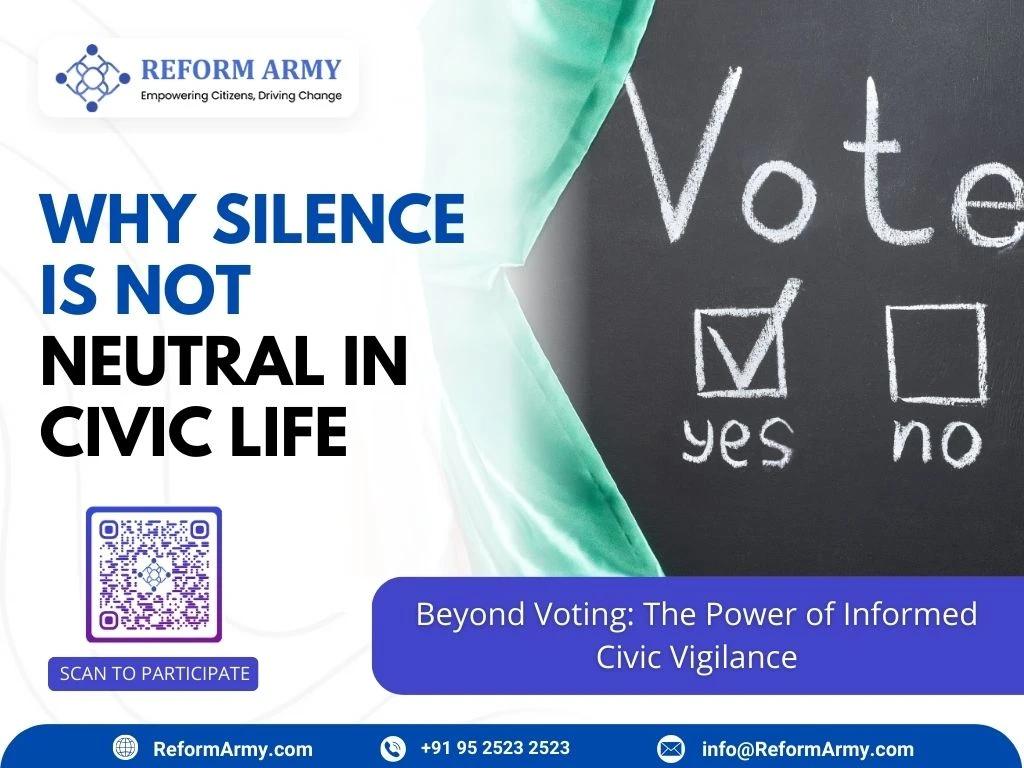
Beyond Voting: The Power of Informed Civic Vigilance
Beyond the Ballot: The Scope of Civic Responsibility
For many individuals, civic duty appears complete once a vote has been cast. While electoral participation remains essential, democracy depends on sustained public awareness and engagement beyond polling day. Institutions function effectively when citizens remain attentive to how decisions are made, how authority is exercised, and how accountability is maintained.
Civic responsibility is therefore not an occasional act but a continuing practice. It involves informed observation, thoughtful questioning, and constructive communication with public bodies. Without this ongoing involvement, governance risks becoming distant from the people it serves.
When Information Demands Reflection
Global attention surrounding the release of Epstein-related documents has prompted renewed discussion about transparency, power structures, and institutional oversight. Such moments demonstrate how the emergence of information can challenge societies to confront difficult questions about systemic safeguards and accountability.
However, these situations also reveal a common pattern. Public reaction often remains confined to digital discussion, speculation, and polarised debate. While awareness increases rapidly, structured civic follow-up is frequently absent. The transition from reaction to responsible engagement is where meaningful democratic participation begins.
From Awareness to Informed Inquiry
Civic maturity requires more than responding to headlines. It calls for careful consideration of underlying questions: how systems functioned, where oversight mechanisms proved insufficient, and what reforms could strengthen institutional integrity.
Reform Army encourages this approach by promoting issue-based inquiry rather than emotional response. By focusing on informed questions and documented communication, it supports a culture of thoughtful civic engagement.
A Structured Channel for Participation
Public concern becomes effective when it is organised and communicated through formal channels. Reform Army provides a platform through which individuals can draft and send focused emails to relevant authorities on matters of transparency, policy gaps, and administrative accountability.
Email-based campaigns create verifiable records, ensuring that concerns are not lost within informal discussion. They also enable follow-up, allowing citizens to track responses and maintain continuity in civic dialogue. This method transforms scattered opinions into structured participation.
Citizens as Stakeholders in Governance
Democratic systems function best when citizens view themselves as participants rather than observers. Constructive engagement contributes local knowledge, highlights overlooked issues, and encourages institutional responsiveness.
Through civic education and accessible tools, Reform Army supports individuals in articulating concerns clearly and respectfully. This approach strengthens trust between the public and institutions while promoting lawful and transparent communication.
Silence and Its Consequences
Silence in civic life is not neutral. When public concerns remain unexpressed through formal channels, systemic gaps may persist without review. In contrast, informed participation introduces oversight, encourages transparency, and supports continuous institutional improvement.
Consistent civic engagement also helps prevent attention from fading once public discussion subsides. Reforms are rarely achieved through isolated moments of awareness; they depend on sustained, documented follow-up.
Conclusion
Voting represents a fundamental democratic right, yet it is only one element of responsible citizenship. Ongoing awareness, informed questioning, and structured communication form the habits that sustain democratic health.
By enabling individuals to convert concern into documented civic action, Reform Army promotes a culture of vigilance and accountability. It demonstrates that meaningful participation does not require public prominence, only consistency and clarity. Democracy is strengthened when citizens remain engaged beyond electoral cycles.
MONTHLY MAGAZINE
Social media icons









© 2024 - 2026 ReformArmy.com - An Initiative by Jainam Jivika Foundation. All Rights Reserved.