Keyboard Activism vs Real Reform: Beyond Awareness
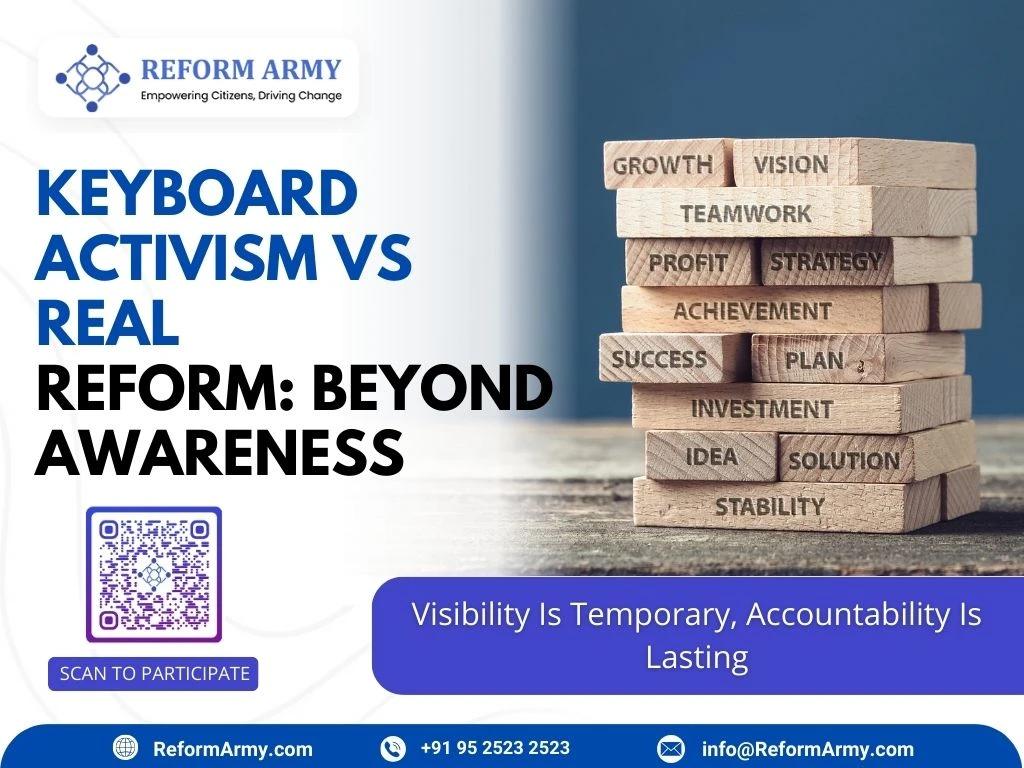
Visibility Is Temporary, Accountability Is Lasting
The Visibility of Digital Expression
In a highly connected environment, public issues often gain attention through hashtags, reposts, and profile updates. Digital platforms allow information to circulate rapidly and enable individuals to express concern within moments. This visibility can highlight overlooked challenges, encourage public discussion, and prompt institutions to acknowledge issues in the public domain.
Such expression plays an important role in shaping awareness. It introduces topics to wider audiences and creates an initial sense of collective concern. However, visibility alone does not guarantee institutional response or systemic improvement.
The Strengths and Limits of Online Engagement
Digital participation has expanded access to public discourse. It connects individuals across regions, amplifies local concerns, and encourages dialogue that might otherwise remain confined. In many cases, it serves as the first stage of civic awareness.
Yet online engagement often follows a predictable pattern: rapid attention, emotional reaction, and gradual decline in focus. Without structured follow-up, important issues risk being replaced by the next topic of discussion. Awareness, when not supported by formal communication and sustained effort, rarely results in measurable reform.
From Awareness to Structured Action
Reform requires documented communication, consistent follow-up, and collaboration with institutions. Reform Army provides a framework through which individuals can convert digital concern into formal civic participation.
Through organised email campaigns, citizens can present clearly articulated concerns to government departments, educational bodies, corporate entities, and policy stakeholders. This process transforms temporary attention into traceable dialogue. Emails create records, encourage formal responses, and support accountability in ways that informal posts cannot.
Documentation and Institutional Dialogue
One of the key differences between digital expression and structured advocacy lies in documentation. Social media content is often transient, whereas formal communication becomes part of an institutional record.
Documented queries allow for follow-up, evaluation, and continuity. They support transparency by ensuring that concerns are acknowledged within administrative processes. This approach shifts civic participation from symbolic expression to measurable engagement.
Ground-Level Reform and Community Collaboration
Sustainable change depends on direct engagement with communities, careful understanding of underlying challenges, and consistent implementation of solutions. Field-based initiatives, local collaboration, and long-term planning contribute to improvements that are practical and enduring.
While such efforts may not attract widespread online attention, they address root causes and produce tangible outcomes. Ground-level reform reflects sustained commitment rather than momentary visibility.
Integrating Digital Awareness with Civic Participation
Digital platforms and structured advocacy need not function separately. Awareness can introduce issues, while email-based communication formalises them and community collaboration supports implementation.
Reform Army encourages this integrated approach. It enables individuals to move from expression to organised participation, ensuring that public concern leads to constructive institutional dialogue.
Measuring Real Impact
Effective reform is reflected in improved systems, responsive institutions, and enhanced public services. These outcomes result from consistent participation rather than isolated expressions of concern.
Sharing information raises visibility, but documented communication builds accountability. Community engagement supports practical implementation. Together, these elements form a complete cycle of civic reform.
Conclusion
Reform is not defined by trends or short-term attention. It is shaped by persistence, clarity of purpose, and collaborative effort. When citizens choose structured engagement alongside awareness, they contribute to processes that strengthen governance and support meaningful improvement.
By providing accessible tools for organised communication, Reform Army demonstrates that real change emerges from informed participation, documented advocacy, and sustained civic responsibility.
MONTHLY MAGAZINE
Social media icons









© 2024 - 2026 ReformArmy.com - An Initiative by Jainam Jivika Foundation. All Rights Reserved.