Turning Frustration into Structured Reform
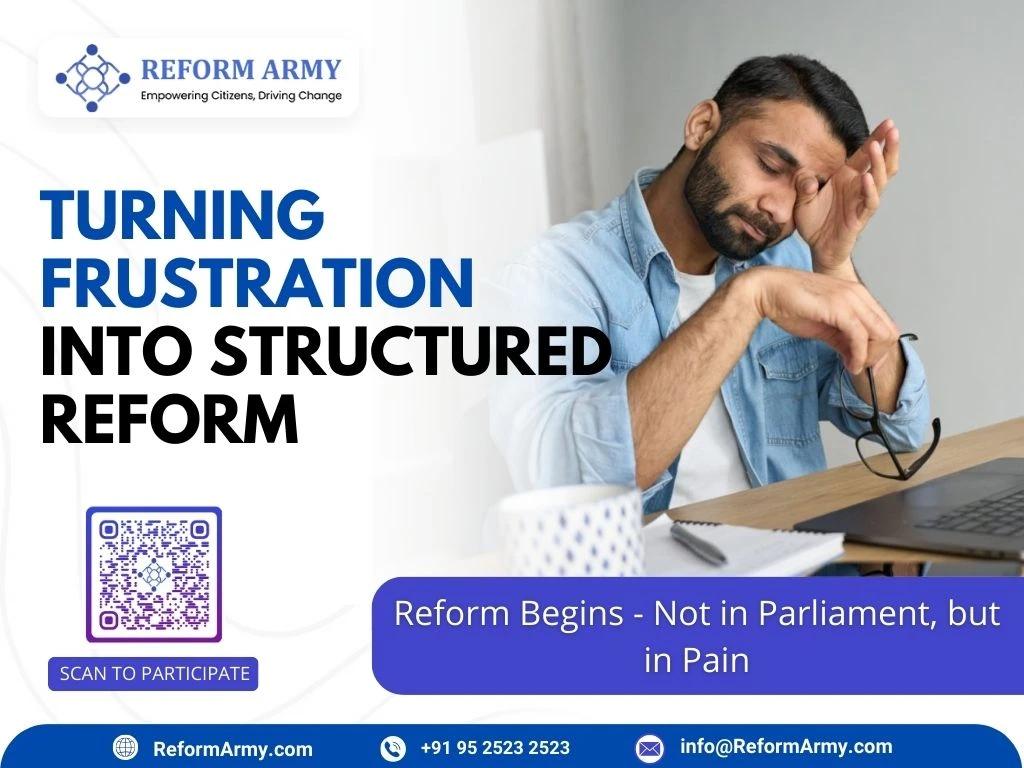
Reform Begins - Not in Parliament, but in Pain
Where Personal Pain Exposes Public Failure
There are moments when frustration becomes a quiet fire. Not the kind that destroys, but the kind that illuminates what is broken and demands attention. Reform rarely begins in legislative halls; it begins in lived experience. It begins when effort is betrayed, when dignity is denied and when justice is delayed until it feels unreachable.
A student studies for months only to discover that an examination paper was leaked. A patient loses their life because timely medical care never arrived. A woman gathers the courage to report wrongdoing and is told that nothing will change. These are not isolated incidents; they are points where personal pain reveals structural failure. It is at this intersection that the impulse for reform is born.
This understanding lies at the heart of Reform Army, an initiative of JJFIndia. It is built on a simple but demanding idea: reform is not a slogan but a civic responsibility. Systems do not deteriorate overnight, and they do not improve through passive frustration. They change when citizens shift from observation to participation.
From Complaint to Civic Action
Public discourse often centres on the phrase “the system is broken”. While this reflects genuine disillusionment, it can also produce resignation. Reform requires moving beyond expression of dissatisfaction towards structured, collective action.
Reform Army provides a platform where individuals can transform concern into organised campaigns. Whether the issue relates to education, healthcare, environmental protection, gender justice or administrative transparency, the emphasis is on participation that is informed, lawful and sustained. It recognises that silence allows inefficiency and injustice to persist, whereas coordinated civic engagement compels accountability.
Participation as Democratic Practice
Democracy does not function solely through elections or parliamentary debate. It depends on continuous public involvement. When citizens document issues, raise awareness, collaborate with others and advocate for practical solutions, governance becomes more responsive.
Initiatives such as Reform Army encourage this form of engagement by offering a structured space for dialogue and action. They make it possible for individuals, particularly young people, to understand that reform is not reserved for institutions; it is shaped by those who experience its absence.
The Power of Collective Voice
History demonstrates that meaningful change often begins with individuals who refuse to accept persistent injustice as inevitable. However, isolated voices are easily ignored. When concerns are organised into campaigns, supported by evidence and amplified through collective participation, they gain legitimacy and influence.
Reform Army seeks to channel this collective energy constructively. It is not about opposition for its own sake, but about identifying gaps, proposing solutions and working towards measurable improvement. In doing so, it reframes civic engagement from sporadic outrage to consistent responsibility.
A Call to Conscious Citizenship
India does not lack awareness; it often lacks sustained follow-through. Posting about an issue may generate temporary visibility, but reform requires continuity, collaboration and accountability. The transition from passive commentary to active involvement is the point at which democratic participation becomes meaningful.
By enabling citizens to initiate campaigns and work together on shared concerns, Reform Army positions participation as a daily civic practice rather than an occasional reaction. It invites individuals to recognise that reform is not granted; it is built.
Conclusion
Reform does not originate in policy documents alone; it begins in the lived experiences of people who encounter injustice and choose not to accept it as permanent. Platforms such as Reform Army demonstrate that when pain is transformed into organised civic action, it can illuminate pathways to structural change. Real progress emerges not from waiting for permission, but from informed, collective participation that holds systems accountable and works persistently towards improvement.
MONTHLY MAGAZINE
Social media icons









© 2024 - 2026 ReformArmy.com - An Initiative by Jainam Jivika Foundation. All Rights Reserved.